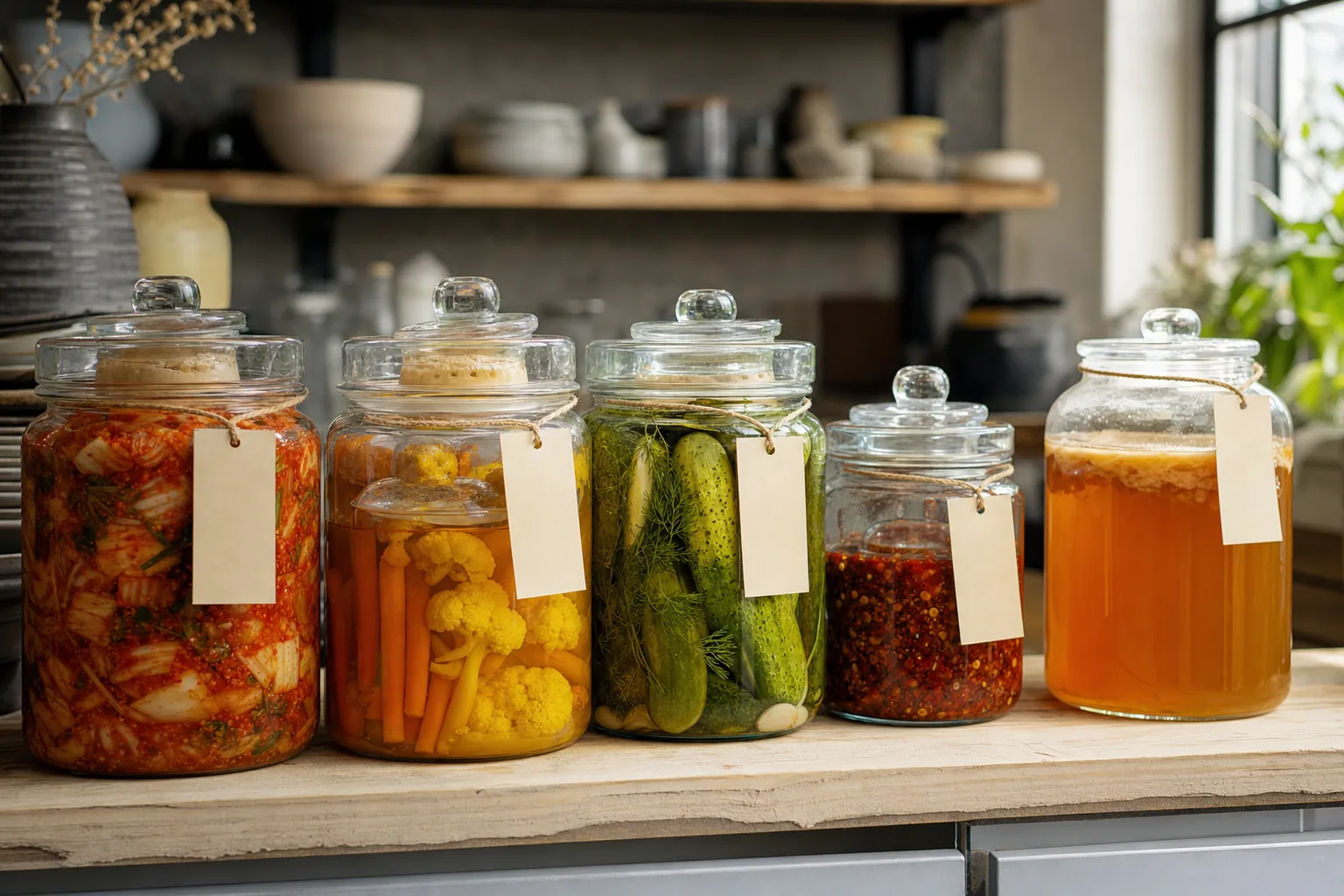
Why restaurants ferment
Fermentation gives a kitchen flavors it cannot buy: the sour crunch of a fresh pickle, the funk of aged kimchi, the deep savoriness of a house miso. It also turns surplus produce into something valuable. A glut of summer cucumbers or the outer leaves of cabbages can become a condiment that lifts dishes for months. Done well, fermentation adds acidity, complexity and identity to a menu.
It also asks for discipline. Ferments are living processes that change from day to day, and they occupy space, time and attention. A successful program is not a shelf of interesting jars; it is a small set of reliable recipes, documented procedures and someone responsible for checking them. The rest of this guide covers the techniques and the systems that make fermentation safe and repeatable in a working kitchen.
How lacto-fermentation works
Lacto-fermentation relies on lactic acid bacteria that live naturally on vegetables. When you submerge vegetables in salt brine or salt them until they release their own liquid, the salt and lack of oxygen discourage many spoilage organisms while lactic acid bacteria thrive. They convert sugars into lactic acid, the pH drops, and the increasingly acidic environment preserves the vegetables and gives them their characteristic tang.
Three variables control the process. Salt concentration determines which microbes can grow and affects texture. Temperature sets the speed: around 18 to 22 degrees Celsius gives steady, clean fermentation, while warmer rooms ferment faster and can soften vegetables or encourage off flavors. Oxygen exclusion keeps mold and surface yeasts at bay, so vegetables must stay under the brine using weights, and containers should allow gas to escape.
Kitchens in hot climates, including much of India in summer, often ferment in a cool room or a temperature-controlled cabinet. Shorter fermentation times and closer monitoring compensate for heat. In very humid kitchens, watch for surface yeasts and mold around lids, and keep containers on clean, dry shelving. Record the room temperature alongside each batch so you can explain why one batch fermented in four days and the next took ten.
Brines and salt percentages
The most reliable way to salt a ferment is by percentage of weight. For dry-salted ferments such as sauerkraut, weigh the shredded cabbage and add salt at about two percent of that weight. For brined vegetables, a common professional method is to weigh the vegetables and the water together and add salt as a percentage of the total, which keeps the final salinity consistent however tightly the jar is packed.
Use non-iodized salt without anti-caking agents, such as pure sea salt or kosher salt, and filtered or dechlorinated water if your supply is heavily chlorinated. Write the salt percentage into the recipe, not a spoon measure, because salt crystals vary enormously in size. Weighing also means a recipe can be scaled from a two-liter jar to a twenty-liter crock without guesswork.
- Weigh the prepared vegetables in grams.
- Add enough water to cover them in the container and weigh the water.
- Add the two weights together to get the total weight.
- Multiply the total by the target salt percentage, for example 0.03 for three percent.
- Dissolve that weight of salt in the water, pour it over the vegetables and weigh them down below the surface.
- Label the container with the date, weights, salt percentage and the cook’s initials.
| Ferment | Method | Salt | Typical time at 18 to 22 °C |
|---|---|---|---|
| Sauerkraut | Dry salted | About 2% of cabbage weight | 2 to 6 weeks |
| Brined vegetables (carrots, beans, radish) | Brine | 2 to 3% of total weight | 5 to 14 days |
| Cucumber pickles | Brine | 3 to 5% of total weight | 1 to 3 weeks |
| Chili mash for hot sauce | Dry salted mash | 3 to 5% of chili weight | 2 to 8 weeks |
| Kimchi | Salted, then paste | Cabbage salted, final about 2 to 3% | 1 to 3 days, then refrigerated |
Kimchi, idli batter, kombucha and koji
Each classic ferment brings its own technique and risks. These summaries are starting points for building standard recipes; test small batches before scaling and keep notes on every variable. Above all, decide which ferments you will make often enough to master; it is better to run two of these well than all four occasionally. Each one also needs its own labeled containers and a clear place in the cleaning schedule.
Kimchi
Napa cabbage is quartered and salted, either dry or in a strong brine, for several hours until the leaves bend without snapping, then rinsed and drained well. A paste of gochugaru, garlic, ginger, a little sugar or grated pear, and often fish sauce or salted shrimp is rubbed between the leaves with scallion and radish. It ferments at room temperature for one to three days, until it smells pleasantly sour, then moves to the refrigerator. Fish sauce and shrimp are allergens, and a vegan version needs a separate recipe and label.
Idli and dosa batter
Idli batter is usually made from parboiled rice and urad dal, soaked separately and ground, in ratios such as three or four parts rice to one part dal, with a few fenugreek seeds to aid fermentation. Mixed with salt, the batter ferments for roughly eight to fourteen hours in a warm place until it has risen and smells mildly sour. In cool kitchens a proofing cabinet around 30 degrees helps. Once fermented, refrigerate it and use it within a defined window.
Kombucha
Kombucha is sweetened tea fermented by a culture of bacteria and yeast, often called a SCOBY, together with starter liquid from a previous batch. The starter acidifies the tea immediately, which protects it while fermentation gets going. A second fermentation in sealed bottles builds carbonation and can build dangerous pressure, so use bottles rated for pressure and refrigerate promptly. Kombucha can also develop measurable alcohol, which may bring it under alcohol regulations in some places.
Miso and koji
Koji is rice, barley or soybeans inoculated with the mold Aspergillus oryzae and incubated, typically at around 28 to 35 degrees with high humidity, for about two days. Its enzymes break down starches and proteins, which is why koji is the engine of miso, soy sauce, sake and shio koji marinades. Miso combines koji with cooked soybeans and salt and ages for months. Start with purchased koji from a reputable supplier before culturing your own.
Safety, testing and documentation
Properly made ferments have a long, safe history, but a restaurant must be able to show that its process is controlled. Acidity is the key measure. A pH of 4.6 or below is widely used as the threshold below which dangerous bacteria such as Clostridium botulinum cannot grow, and many kitchens aim lower, around 4.2 or below for kombucha and many vegetable ferments. Test with a calibrated digital pH meter; strips are too imprecise for safety decisions.
Many food authorities treat fermentation as a specialized process. In some jurisdictions a restaurant needs a written food safety plan, such as a HACCP plan, or specific approval before fermenting on site. Talk to your local food authority before launching a program, and keep records that would satisfy an inspector. Good records also help you answer a guest’s question with confidence.
- Batch log: product, date started, weights, salt percentage, temperature and the person responsible.
- pH readings at set intervals and at the end of fermentation, with the meter’s calibration record.
- Sensory checks: smell, texture and appearance, with clear discard criteria.
- Date moved to refrigeration and a use-by date based on your plan and local guidance.
- Allergen information for each ferment carried through to every dish that uses it.
Building a fermentation program
Start small. Two or three ferments that your menu genuinely needs, made well and consistently, are worth more than a wall of experiments. Choose ferments that use ingredients you already buy, that suit your cuisine and that fit the space and temperature you have. A South Indian kitchen might begin with idli and dosa batter and a lime pickle; a modern bistro might choose a brined vegetable, a hot sauce and a kombucha.
Assign ownership. One trained person, with a named deputy, should check ferments daily, record readings and decide when a batch is ready. Fermentation fails most often when it is everyone’s job and therefore nobody’s. The owner should also have authority to discard a batch without asking permission, and the kitchen should treat a discarded batch as a normal part of the process rather than a failure to hide. A short daily checklist near the fermentation shelf keeps the routine visible.
Plan the physical setup: food-grade containers, glass weights or brine bags, airlocks or loose lids, a dedicated shelf away from heat and direct sun, and refrigerator space for finished products. Cost each ferment like any other recipe, including labor and the time it occupies space. Make sure the shelf is easy to clean, and keep raw meat and fish well away from it.
- List the flavors your menu needs and choose two or three ferments that supply them.
- Check with your local food authority whether a written plan or approval is required.
- Write standard recipes with weights, salt percentages, temperatures and target pH.
- Test small batches, record results and refine the recipes before scaling.
- Train the responsible staff and set up logs, labels and discard rules.
- Review the program each season, retiring ferments that the menu no longer uses.
Troubleshooting common fermentation problems
Soft or mushy vegetables usually mean the ferment ran too warm, the salt was too low or the vegetables were past their best. Use firm, fresh produce, check the salt calculation and move the batch somewhere cooler. Adding tannin-rich leaves such as grape or bay leaves is a traditional way to help cucumbers stay crisp. A ferment that tastes flat and barely sour may simply need more time, or the room may be too cold for active fermentation.
Cloudy brine and a little sediment are normal signs of lactic fermentation, not spoilage. Bubbling that stops after a week is expected too, as the bacteria run out of sugar. Real warning signs are different: colored or fuzzy mold, a slimy feel, a putrid smell or a pH that refuses to fall. When those appear, discard the batch, clean the container thoroughly and review the log to find the cause before starting again.
Frequently asked questions
What salt percentage should I use for lacto-fermented vegetables?
For brined vegetables, two to three percent of the combined weight of vegetables and water is a common starting point, rising to three to five percent for cucumber pickles. For dry-salted ferments such as sauerkraut, use about two percent of the vegetable weight. Use non-iodized salt and weigh it rather than measuring by volume.
Do restaurants need permission to ferment food in-house?
It depends on where you operate. Some food authorities treat fermentation as a specialized process and require a written safety plan, such as a HACCP plan, or a specific approval. Others simply expect good records. Contact your local food authority before you start, and keep batch logs, pH readings and discard records either way.
How do I know a ferment is safe?
Follow a tested recipe with a measured salt percentage, keep vegetables under the brine, ferment at a moderate temperature and confirm acidity with a calibrated pH meter, commonly at 4.6 or below and often lower. Discard anything with fuzzy or colored mold, slime or a putrid smell, or any batch that does not acidify on schedule.
How long does idli batter take to ferment?
Typically eight to fourteen hours in a warm place, until the batter has risen noticeably and smells pleasantly sour. Warm climates ferment faster; cool kitchens may need a proofing cabinet around 30 degrees Celsius. Once fermented, refrigerate the batter and use it within the time set in your kitchen’s procedures and local guidance.
Can kombucha contain alcohol?
Yes. The yeasts in kombucha produce some alcohol, and levels can rise during a long or warm second fermentation. In some places drinks above a set alcohol threshold fall under alcohol licensing and labeling rules. If you make kombucha commercially, test and control alcohol content and check the regulations that apply to you.
Why is my fermentation brine cloudy?
Cloudy brine is normal in lacto-fermentation. It comes from active bacteria, yeast and fine particles released by the vegetables, and a layer of pale sediment often settles at the bottom. It is not a sign of spoilage on its own. Discard the batch only if you also see fuzzy or colored mold, slime or a putrid smell.
- #fermentation
- #lacto-fermentation
- #kimchi
- #kombucha
- #foodsafety
- #koji