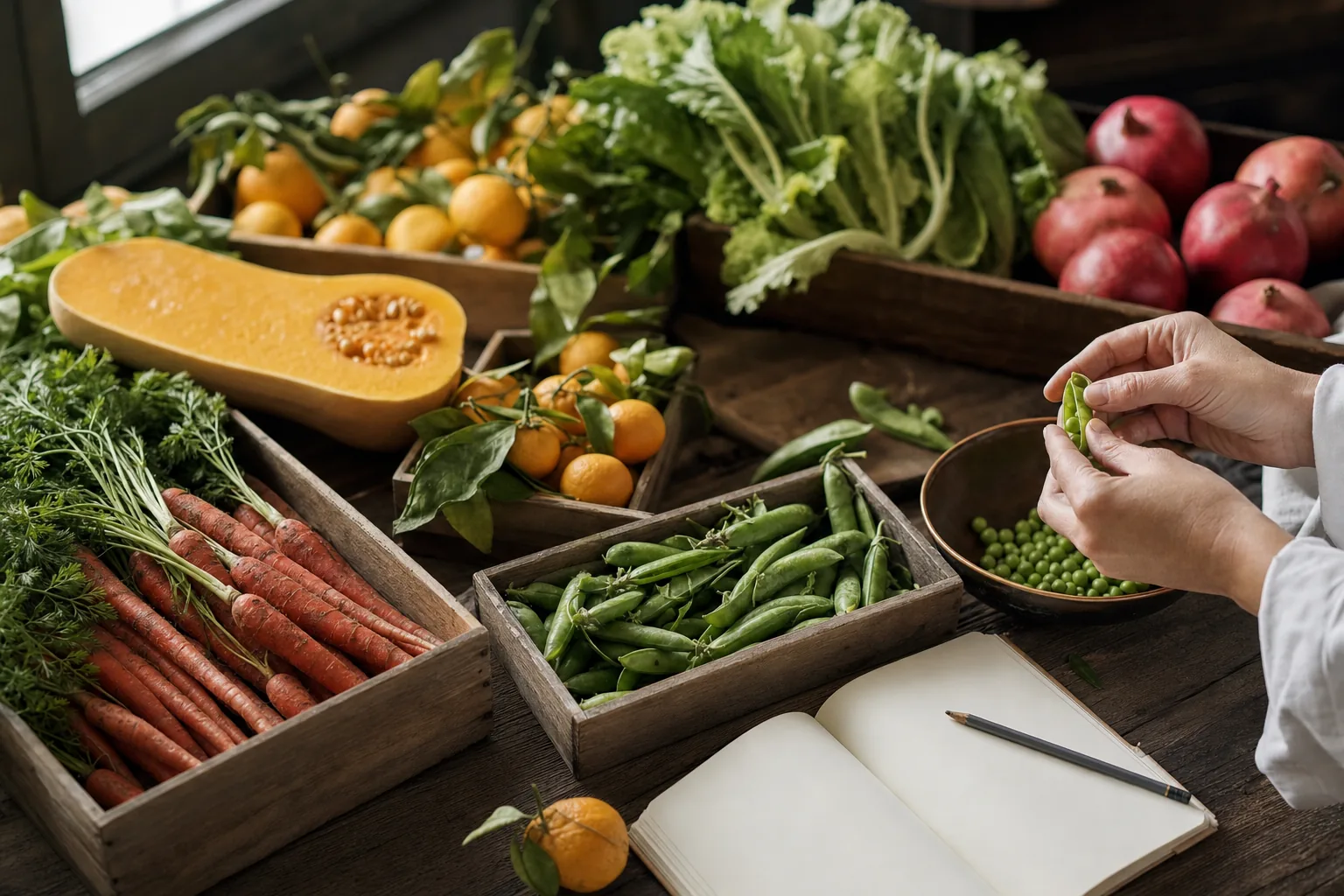
Why seasonal menus are worth the extra work
Cooking with the season is often described as a philosophy, but in a working kitchen it is mostly a practical decision. Produce at its natural peak tastes better, needs less manipulation to taste good and is usually cheaper and more plentiful from suppliers. A tomato bought at the height of summer can carry a salad with nothing more than salt, oil and torn basil. The same dish in midwinter needs roasting, sugar or a different tomato entirely to make sense.
Seasonality also gives a restaurant a reason for regulars to come back. A guest who loved your raw mango and coconut salad in April has something to look forward to next year, and a guest who visits in December finds a menu that feels connected to the weather outside. That sense of change, handled well, keeps a menu from becoming a fixed list that staff and guests stop paying attention to.
The cost is planning. A seasonal kitchen has to cost recipes more often, retrain staff on new dishes, adjust prep lists and keep the printed or digital menu accurate as items come and go. The rest of this guide is about doing that work deliberately, so seasonality becomes a system rather than a scramble every few weeks. Start small if you need to, with one seasonal section.
Build a seasonality calendar for your region
Generic seasonal charts are a starting point, not a plan. Seasons depend on latitude, altitude, rainfall and how your supply chain actually works. Mumbai, Delhi and Bengaluru have noticeably different produce rhythms, and a kitchen in coastal California sees a much longer tomato season than one in northern England. Build your own calendar from what your suppliers delivered over the past year, what local markets carry and what your own invoices show.
Lay the calendar out month by month with three columns for each ingredient: arriving, peak and fading. The peak window is when you plan headline dishes. The arriving and fading windows are when you plan specials and garnishes, because quality and price are less predictable. Keep the calendar on the office wall or in a shared document and update it each season with notes about what surprised you.
Include more than vegetables and fruit. Fish and shellfish have seasons and closed periods, game is regulated by season in many countries, dairy changes with pasture, and in India the monsoon affects fishing, leafy greens and transport. A useful calendar reflects everything that changes in quality or availability over the year. Add festival periods too, such as Diwali, Christmas or Eid, when demand for certain ingredients spikes and prices move with it.
| Season | Temperate Europe and North America | North and West India | Typical kitchen uses |
|---|---|---|---|
| Spring | Asparagus, peas, rhubarb, wild garlic, radishes | Raw mango, jackfruit, drumsticks, early cucumbers | Light starters, pickles, bright salads, quick sautes |
| Summer | Tomatoes, stone fruit, berries, sweet corn, zucchini | Mangoes, watermelon, bottle gourd, tender coconut | Cold soups, chaats, coolers, sorbets, grilled vegetables |
| Monsoon or late summer | Figs, peppers, eggplant, late berries | Corn on the cob, jamun, colocasia leaves, bitter gourd | Street-food specials, fritters, preserves, smoky grills |
| Autumn | Squash, apples, pears, wild mushrooms, chestnuts | Water chestnuts, sweet potatoes, custard apples, pomegranates | Roasts, braises, purees, tarts, festive sweets |
| Winter | Citrus, root vegetables, kale, leeks, brassicas | Red carrots, mustard greens, fenugreek, peas, cauliflower | Halwa, saag, slow braises, gratins, citrus desserts |
Make suppliers part of the planning
The farmer, market trader or distributor you buy from sees the season coming weeks before it reaches your door. They know when the first good asparagus is due, when mango quality is about to drop, or when rains have damaged a crop of greens. A short call or market visit before each planning cycle gives you better information than any chart, and it builds the relationship that gets you the best boxes when supply is tight.
Be clear about what you need. A supplier can plan for you only if they know your volumes, your quality standards and how flexible you can be. If you are willing to take misshapen but perfectly good fruit for sauces and jams, say so; that flexibility often earns a better price. If a dish depends on a specific variety, such as Alphonso mangoes for a dessert or Datterini tomatoes for a pasta, agree in advance what happens when it is not available.
- What will be at its best in the next four to six weeks, and what is about to finish?
- Which items are likely to see price swings, and how much notice can you give me?
- Can I get seconds, ugly produce or bulk lots for sauces, preserves and staff meals?
- What is the realistic substitute if the variety I plan around fails or is delayed?
- Is there anything unusual you are growing or sourcing that few kitchens are buying yet?
- What are the delivery days and order cut-offs during holidays and festival weeks?
Cross-utilize every seasonal ingredient
Seasonal produce is cheapest and best when you buy it in quantity, but a kitchen can only buy in quantity if it has somewhere to use it all. Cross-utilization means planning several dishes around the same peak ingredient so it moves quickly, waste stays low and staff build skill with it. Cross-utilization is the difference between a seasonal menu that costs well and one that quietly loses money on spoiled stock.
Think in terms of the whole ingredient and all of your menu sections at once. A case of winter carrots can become a roasted carrot starter, a carrot and ginger soup, gajar ka halwa for dessert and a pickled garnish for the bar snack. Each use draws on different parts and different qualities of the same delivery. The best roots go to the starter, smaller or broken ones go to soup, and anything left becomes the pickle.
One ingredient, three or four dishes
When you plan a seasonal menu, list your two or three headline ingredients and map them across starters, mains, sides, desserts and drinks. Aim for at least three uses of each. Summer corn might appear grilled with lime and chili butter, in a chowder or makai shorba, and as a sweet corn ice cream or kheer. Stone fruit can go savory with burrata, into a glaze for pork, and into a cobbler or a shrub for the bar.
Check that the uses rely on different prep stations so one cook is not overloaded. A dish that uses the same ingredient on the grill, the cold station and pastry spreads the work and keeps the produce moving through the whole kitchen.
Plan around trim and surplus
Trim is part of the plan, not an afterthought. Pea pods make a sweet stock, corn cobs make a broth, citrus peels become candied garnishes or oleo saccharum for drinks, and herb stems go into green oils or chutneys. Decide in advance which dish absorbs each by-product.
Preserving extends a short season and catches surplus at the peak. Pickles, jams, ferments and frozen purees let you serve a taste of summer in winter at a fraction of the original cost, and they give the menu a distinctive house character that a competitor cannot easily copy.
Cross-utilization is the difference between a seasonal menu that costs well and one that quietly loses money on spoiled stock.
Test new dishes as specials first
Specials are your test kitchen in front of real guests. A new seasonal dish can look excellent at a tasting and still struggle in service because it is slow to plate, hard to describe or simply not what your guests want to order. Running it as a special for a week or two tells you far more than any internal tasting, with little risk to the main menu.
Set criteria before you start. Decide what success looks like in sales, plate waste, ticket times and comments from front-of-house staff. Pull the numbers from your POS or sales records rather than relying on how busy the dish felt on a single night, and ask servers to record the questions guests ask, because those questions often show where the description needs work.
- Write the recipe and plating spec, including exact weights, garnish and the plate it goes on.
- Cost the dish at current seasonal prices and set a price that meets your target food cost.
- Run a staff tasting so servers can describe it honestly and cooks can practise plating at speed.
- Put it on as a special for a fixed period, usually one to two weeks, with a clear description.
- Track orders, returned plates, ticket times and guest questions using your sales records and team notes.
- Decide whether to promote it to the menu, adjust it and test again, or retire it until next season.
Roll changes in rather than rewriting everything
Some restaurants change the whole menu four times a year on a fixed date. It looks tidy, but it puts heavy strain on a kitchen: new prep lists, new costing, new plating and new training all land in the same week, often while the old menu is still being cooked. Mistakes multiply, and the first nights of a new menu are frequently the weakest service of the season.
A rolling approach swaps two to four dishes at a time as ingredients arrive and fade. The kitchen learns each new dish properly, costing stays current, and regulars notice a menu that keeps evolving. Produce also rarely respects calendar dates, so a rolling menu tracks the actual season far more closely than one tied to fixed changeover days. It also spreads printing, photography and training across the year instead of concentrating it in one exhausting week.
Keep a stable core. Most successful seasonal restaurants have signature dishes that stay all year, perhaps with seasonal garnishes, alongside a rotating section. The core protects your best sellers and gives guests something reliable, while the rotating dishes carry the seasonal story. A popular core dish can still nod to the season, such as a year-round dal that changes its garnish from raw mango in spring to crisp fried onions and fenugreek in winter, without disrupting the recipe or the prep list.
Communicate seasonality to guests and staff
Seasonality only adds value if guests notice it. Name the produce and its origin where you can do so honestly, such as Kashmiri walnuts, Nashik grapes or heirloom tomatoes from a named nearby farm, and only if you can keep that claim accurate. Avoid vague phrases like farm fresh or locally sourced unless you can back them up, because guests and inspectors increasingly expect provenance claims to be true.
A small seasonal section, a short line at the top of the menu or a chalkboard of the week's arrivals tells guests that the menu moves with the calendar. Servers do the rest. Brief the team at line-up on what is new, what is ending and why, and let them taste every new dish. A server who has eaten the first asparagus of the year sells it with real enthusiasm.
Tell guests when something has finished, too. A short line explaining that a dish has ended for the season is better than leaving a favorite on the menu and disappointing someone who orders it. Handled warmly, the end of a season becomes part of the story rather than a complaint. Some kitchens even note the expected return month, which gives regulars something to look forward to.
Frequently asked questions
How often should a restaurant change its seasonal menu?
There is no single right answer. Many kitchens change the full menu four times a year, but a rolling approach that swaps two to four dishes whenever key produce arrives or fades is often easier to run and tracks real seasons more closely. Keep a stable core of signature dishes and let a smaller section rotate.
How do I know which produce is in season where I am?
Start with a regional chart, then correct it with real information: your suppliers' advice, what local markets carry and a year of your own delivery invoices and notes. Seasons vary with latitude, altitude and rainfall, so a calendar built from your own supply chain will always be more accurate than a generic list.
Does a seasonal menu cost more to run?
Ingredients at their peak are often cheaper, but planning, costing, training and menu updates take more time. Cross-utilization, buying peak produce in volume and preserving surplus usually offset those costs. The risk is waste from poorly planned dishes, so cost every new recipe at current prices and test it as a special first.
What is cross-utilization in menu planning?
Cross-utilization means using the same ingredient in several dishes across the menu so it moves quickly and nothing is wasted. A case of winter carrots might become a roasted starter, a soup, a halwa and a pickle. It lowers waste, lets you buy in volume and spreads prep across different stations.
How do I tell guests a seasonal dish has run out?
Update the menu as soon as the kitchen calls it, rather than waiting until the end of service. On a digital menu you can mark the dish sold out so guests see it before ordering. Brief servers to explain that the dish has finished for the season and to suggest what has replaced it.
- #seasonalmenuplanning
- #seasonalproduce
- #menudevelopment
- #supplierrelationships
- #specials