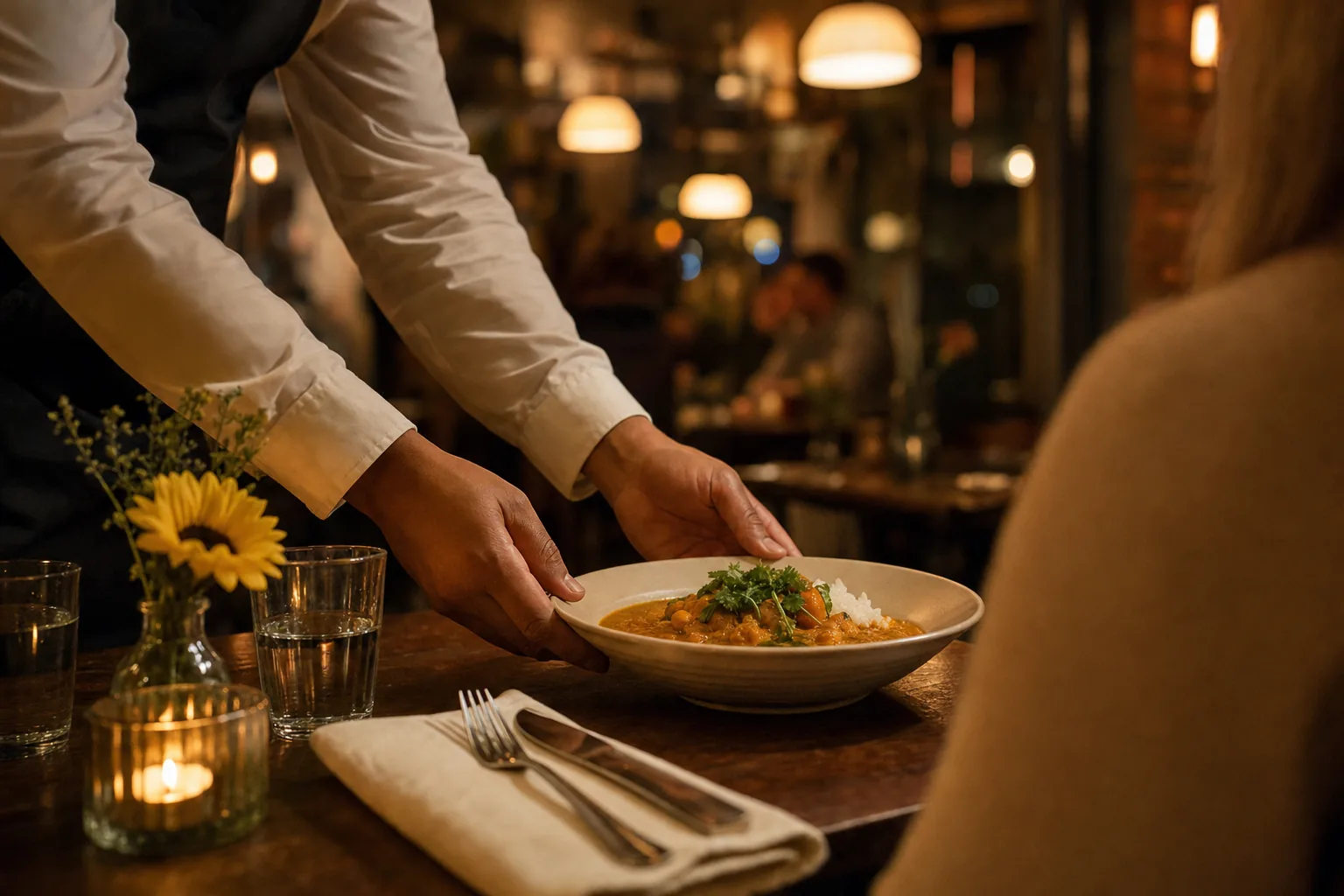
Service is what you do; hospitality is how it feels
A restaurant can deliver technically perfect service, with plates cleared from the right side, water topped up and the bill presented promptly, and still leave guests cold. Service is the choreography of tasks. Hospitality is the sense that the people doing those tasks were glad you came and paid attention to you as a person. The two work together, but it is hospitality that turns a first visit into a regular table.
Many cultures have a deep tradition here. In India the phrase atithi devo bhava, the guest is god, is taught to children long before anyone works a restaurant shift. Across the Mediterranean and East Asia similar ideas shape how hosts treat visitors. Professional hospitality borrows from those traditions and adds structure, so the warmth does not depend on whether the right person happens to be working.
The practical goal for any operator is to make good service reliable and then give staff enough confidence and freedom to add genuine warmth on top. That balance is what this guide is about: the structure that keeps standards steady, and the habits that let real warmth show through even when the dining room is full and the kitchen is behind. Rules without warmth feel robotic; warmth without rules collapses on a busy Saturday.
Rules without warmth feel robotic; warmth without rules collapses on a busy Saturday.
Map the guest journey from arrival to farewell
Every visit follows a recognizable arc: the approach and entrance, the greeting, seating, menus and drinks, ordering, the meal itself, checking in, dessert or coffee, the bill, and the goodbye. Each stage is a moment where a guest can feel looked after or forgotten. Walking through that arc as if you were a first-time guest, ideally on a busy night, reveals friction that owners stop noticing.
Look at the details: Is the entrance obvious and well lit? Is someone at the door within moments, even if only to say they will be right with you? Does the guest know what happens next while they wait? Is the menu easy to read in the dining room's light? How long does it take to get the bill once the guest asks? Small gaps such as a long wait with no acknowledgment do more damage than a slightly overcooked steak.
| Stage | What the guest needs | Common failure |
|---|---|---|
| Arrival | Prompt acknowledgment and a clear next step | Standing unnoticed at the door |
| Seating | A table that suits the party, explained choices | Being led to the worst table without a word |
| Ordering | Time to decide, honest guidance, accurate menu | Being rushed or told a dish is gone after ordering |
| During the meal | Unobtrusive attention, correct pacing | Long gaps or constant interruptions |
| Bill and farewell | Quick payment and a genuine goodbye | Waiting ten minutes to pay, no thanks at the door |
Write down your steps of service
A written sequence of service gives everyone the same baseline. It should match your concept: a counter-service cafe and a twelve-course tasting room need very different steps. Keep it short enough that staff can recite it, and specific enough that a new server knows exactly what good looks like. Timings are useful guides, not stopwatch targets; the point is that no table waits without acknowledgment.
Include the behaviors you care about most, not every possible task. If your restaurant is known for its tea service or tableside dosa, describe how that moment should be delivered. Revisit the document when the menu or format changes, and make sure managers follow the same steps they expect from the team. When a step stops making sense for how you actually operate, change it openly rather than letting the team quietly ignore it, because ignored rules weaken the ones that matter.
- Greet every arriving guest promptly, even if only to say you will be with them shortly.
- Seat the party, offer water and menus, and mention anything that changes the menu today.
- Take drinks orders and answer questions about the menu honestly and specifically.
- Take the food order, confirm allergies and dietary needs, and repeat back anything unusual.
- Check in within a couple of minutes of the main course landing, then stay attentive without hovering.
- Clear, offer dessert or coffee, and present the bill when the guest is ready, not before.
- Thank the guest by name if you know it, and invite them back as they leave.
Learn to read the table
Steps of service describe the default. Reading the table is the skill of knowing when to change it. Experienced servers watch body language, conversation flow and small cues: menus closed and stacked, glances around the room, a couple leaning in close, a business table with papers out. Each of those tells you whether to approach, wait, speed up or slow down.
Teach this explicitly rather than hoping people absorb it. In briefings, describe a few tables from the previous night and ask what the cues were. Pair new staff with strong servers for a few shifts so they can see the difference between attentive and intrusive. Over time, servers build a mental library of these cues and respond almost without thinking, which is exactly the instinct you are trying to develop.
Pace
Some guests have forty minutes before a film; others want a long, slow evening. Ask early if you are unsure, and pass that information to the kitchen so courses are fired accordingly. A lunch crowd from nearby offices usually wants the bill offered without having to wave for it, while a family celebration may resent being rushed even slightly.
Signals that need attention
Watch for an untouched plate, a guest scanning the room, a child getting restless or someone pushing food around. Each is a quiet invitation to check in. A brief, specific question such as is the spice level right for you works better than a generic is everything okay, which almost always gets a reflexive yes.
Occasions and regulars
Birthdays, anniversaries, first dates and business dinners each call for a different tone. Note occasions mentioned at booking and pass them to the floor. Recognize regulars, remember their usual order and preferred table, and greet them by name. Being recognized makes a guest feel that the restaurant is partly theirs, and that feeling brings people back.
Communicate sold-out dishes before guests order them
Few moments deflate a table faster than choosing a dish, setting your heart on it, and then being told it is gone. The fix is mostly about timing. Kitchens should tell the floor the moment an item is running low and again when it is out, and servers should mention sold-out dishes when they hand over menus, not after the order is taken.
When you must deliver the news late, do it with a recommendation ready. Say what is out, briefly why if it helps, and suggest one or two alternatives that share what the guest liked about their original choice. If they wanted the grilled fish for something light, suggest the other light dish rather than whatever you need to sell. Keep it brief and warm, and move on without dwelling on the apology.
Digital menus help here because availability can be updated during service. Menulo, for instance, lets owners and managers mark a dish or a single portion size sold out, so guests reading the menu from a QR code see it before they choose. The kitchen-to-floor conversation still matters; a sold-out mark only works if someone updates it promptly. Agree who owns the update on each shift so it never falls between the kitchen and the floor.
Handle complaints quickly and generously
Complaints are inevitable, and how you handle them matters more than the original mistake. Many guests never complain; they simply do not come back. The ones who tell you are giving you a chance to fix it while they are still in the room. Treat that as useful information, not an attack. A calm, generous response shows the guest that the restaurant cares more about their evening than about being right.
Empower staff to resolve common problems on the spot without hunting for a manager. A server who can replace an overcooked dish, remove a drink from the bill or offer a dessert immediately turns frustration into goodwill. Agree in advance what each role can offer, so the response is quick and consistent. Managers should step in for anything more serious and should always visit a table that has had a problem before it leaves.
Afterward, record what happened and look for patterns. A single cold plate is bad luck; the same complaint three nights running is a system problem in the kitchen or on the pass. Bring those patterns to the weekly meeting with the chef and floor managers, agree on a specific fix, and check a fortnight later whether the complaint has stopped appearing. Closing that loop is what turns individual apologies into a better restaurant.
- Listen fully without interrupting, defending or explaining.
- Apologize sincerely for the experience, without blaming colleagues or the guest.
- Ask what would make it right, or offer a clear solution straight away.
- Act quickly, and tell the kitchen or manager exactly what happened.
- Follow up before the guest leaves to confirm the solution worked.
- Log the issue so recurring problems are visible at the next team meeting.
Build consistency through daily habits and training
Guests come back expecting the experience they had last time. Consistency is therefore the backbone of hospitality, and it comes from habits rather than inspiration. A ten-minute pre-shift briefing covering bookings, occasions, specials, sold-out risks, allergens and one service focus point does more than an annual training day. Use the same simple format every day so the team knows what to expect and nothing important is skipped when the shift is busy.
Training should be practical and repeated. Role-play the hard moments: a guest with a severe allergy, a table that has waited too long, a complaint about the bill. Taste new dishes together. Let strong servers coach newer ones on live shifts. Recognize good hospitality in public so the team knows what you value, and give feedback privately and promptly when something falls short.
Managers set the tone. If the general manager greets guests at the door, clears a plate when the floor is busy and speaks respectfully to the kitchen, the team follows. If managers hide in the office during the rush, no written standard will hold. Standards are learned by watching, so the most powerful training is a manager doing the job well in front of the team.
- Run a short pre-shift briefing every service, with one clear focus point.
- Hold tasting sessions for every menu change before guests see the new dishes.
- Role-play allergy questions, complaints and sold-out conversations.
- Pair new hires with experienced servers for their first shifts.
- Recognize great hospitality publicly and give corrective feedback privately.
- Review guest feedback and reviews together once a week.
End every visit well
The last few minutes of a visit shape the memory of the whole evening. A slow bill, a hurried goodbye or a server already turning to the next table can undo an excellent meal. Present the bill promptly when asked, make payment easy, and thank guests genuinely as they leave, ideally from the person who looked after them and a manager or host at the door.
Small gestures carry weight: holding the door, helping with coats, offering an umbrella on a wet night, a sweet such as a piece of mishri or a small biscuit with the bill. None of these cost much, and all of them signal that the guest mattered until the very end. Invite them back sincerely, and if they mentioned an upcoming occasion, suggest they celebrate it with you.
Frequently asked questions
What is the difference between service and hospitality in a restaurant?
Service is the set of tasks the team performs, such as greeting, taking orders, delivering food and processing payment. Hospitality is how those tasks make guests feel: welcomed, understood and cared for. A restaurant can deliver efficient service without warmth, but guests tend to return because of hospitality. The strongest teams make service reliable and then add genuine attention on top.
What are the standard steps of service in a restaurant?
Most sit-down restaurants follow a similar sequence: greet and seat, offer water and menus, take drinks, take the food order while confirming allergies, deliver food, check back shortly after mains land, clear, offer dessert or coffee, present the bill and say goodbye. Adapt the steps to your concept and write them down so every server works from the same baseline.
How should servers handle a guest complaint?
Listen without interrupting, apologize sincerely, and offer a clear solution or ask what would make it right. Act quickly, involve the kitchen or a manager when needed, and check back before the guest leaves. Staff should know in advance what they are allowed to offer, such as a replacement dish or removing an item from the bill, so they can respond without delay.
How do you tell guests a dish is sold out?
Tell them as early as possible, ideally when handing over menus, so nobody chooses a dish they cannot have. Keep the message short, then suggest one or two alternatives that match what attracted them to the original dish. If you use a digital menu, mark the dish unavailable promptly so guests see it before ordering.
How can I train staff to give better hospitality?
Use short daily briefings, tasting sessions for new dishes, role-play of difficult situations and shadowing with experienced servers. Discuss real tables from recent shifts and what the cues were. Recognize great hospitality in front of the team, give private feedback quickly, and make sure managers model the same behavior on the floor every service.
- #hospitality
- #guestexperience
- #restaurantservice
- #stafftraining
- #complainthandling