Why allergen information is a safety system, not a menu detail
For a guest with a serious food allergy, a single mistake can cause a reaction that needs emergency treatment. For a guest with coeliac disease, a small amount of gluten can make them ill for days. These guests rely completely on the information your team gives them. That makes allergen management one of the most important safety systems in the restaurant, alongside temperature control and hygiene.
Good allergen practice is also good hospitality. Guests with allergies and dietary requirements often choose restaurants based on how confidently and clearly staff answer their questions. A team that knows its recipes and handles requests calmly earns loyal regulars and their friends and families too. The reverse is also true: a vague answer, a shrug or a server who says they think it should be fine tells the guest that the kitchen does not really know what is in its food.
This guide covers the principles most kitchens use worldwide: knowing the allergens that apply to you, documenting recipes, preventing cross-contact, training the team, labeling the menu and responding to guests. It is general guidance, not legal advice. Intolerances and preferences, such as lactose intolerance, vegetarianism or religious dietary rules, deserve the same care in accuracy even when the health consequences differ. The systems described here, from recipe records to clear communication at the pass, serve every one of those guests at the same time.
Know which allergens apply where you trade
There is no single global allergen list. Each jurisdiction names the foods that must be declared and sets out how food businesses must provide that information. The lists overlap heavily, with milk, eggs, fish, crustaceans, peanuts, tree nuts, wheat or gluten-containing cereals, soy and sesame appearing in most, but there are important differences. Celery, mustard and lupin, for example, are on the EU list and not on the US list. A kitchen serving international guests will meet people whose home rules differ from local ones.
Obligations for restaurants also differ from those for packaged food. In some places restaurants must provide allergen information for every dish on request or in writing; in others, the rules come from state or city law or from food safety codes. The table below is a starting orientation only. Read the current official text for your location, and recheck it at least once a year, since lists and duties are revised.
| Region | Core list | Notes for restaurants |
|---|---|---|
| European Union | 14 allergens under Regulation (EU) No 1169/2011 | Allergen information must be available for non-prepacked food, including restaurant dishes |
| United Kingdom | The same 14 allergens | Information required for loose food; prepacked for direct sale food needs full ingredient labels |
| United States | 9 major food allergens, including sesame since 2023 | Federal labeling covers packaged food; restaurant disclosure rules vary by state and city |
| India | Allergen declaration under FSSAI labelling and display regulations | Also sets the vegetarian and non-vegetarian symbols; check what applies to food service |
Understand cross-contact in a real kitchen
Cross-contact happens when an allergen is transferred to a food that does not contain it, usually in tiny amounts that cannot be seen. Cooking does not remove allergens the way it kills bacteria, so a dish fried in oil previously used for prawns can still trigger a shellfish reaction. The question is not only what is in the recipe, but what the food touches on its way to the plate.
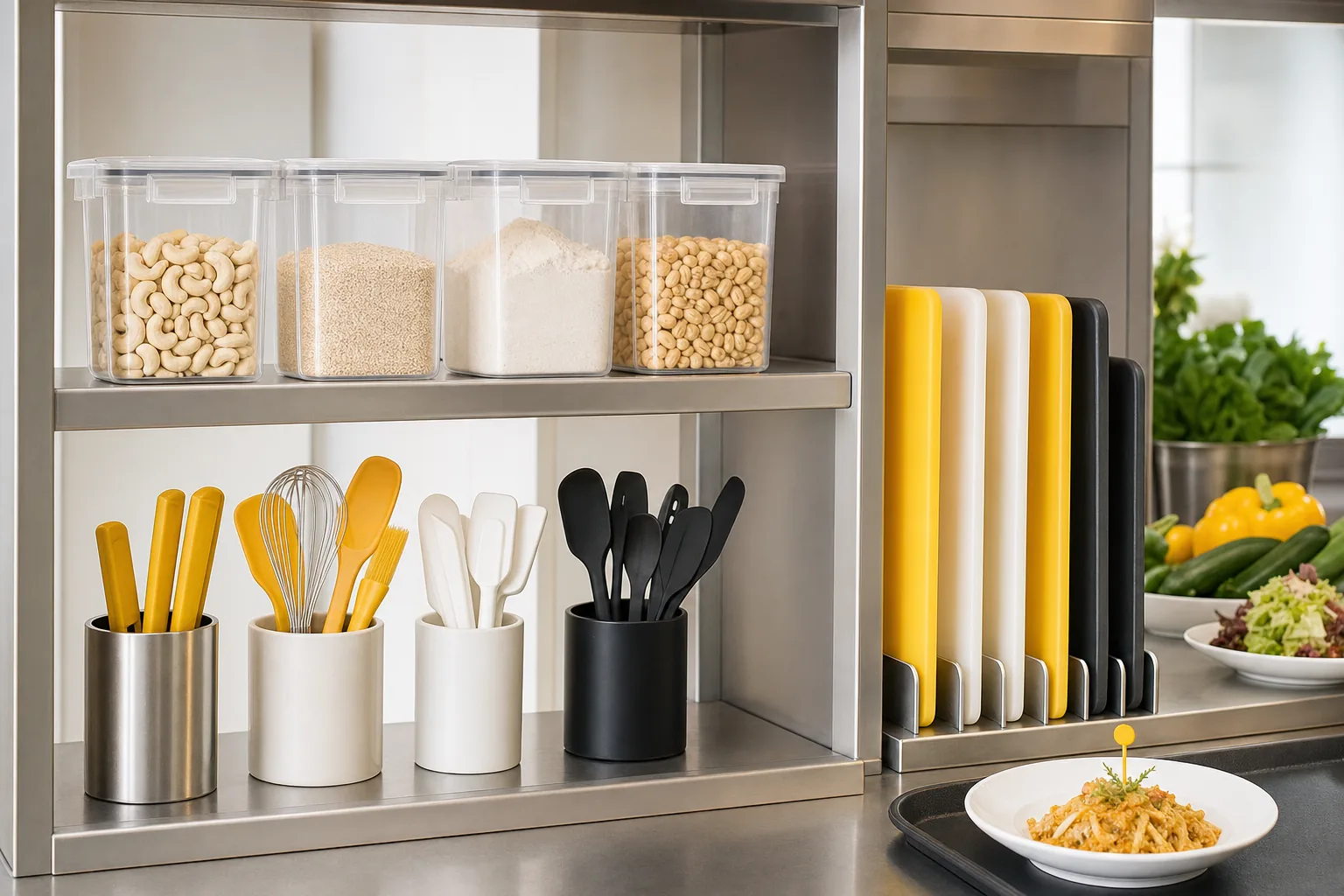
Busy kitchens have many shared points. A tandoor or grill used for marinated meats and paneer, a wok rinsed quickly between dishes, a tempering pan where cashews were toasted, a single flour-dusted bench for breads and gluten-free orders: each can carry allergens. Map these points honestly, because you can only manage risks you have named. Walk the kitchen with the chef and a cook from each station, follow two or three popular dishes from storage to plate, and note every surface, tool and pan they touch. That walk usually reveals shared points nobody had thought about.
- Shared fryer oil, especially where battered, breaded or seafood items are fried.
- Utensils, ladles, tongs and scoops moving between containers during service.
- Cutting boards, benches and slicers used for several ingredients without full cleaning.
- Garnishes and toppings such as nuts, seeds, fried onions and crumbs scattered near other dishes.
- Ghee, butter and oils infused with or used for nuts, garlic or spices.
- Flour dust in the air and on surfaces near bread, naan and pastry production.
Document every recipe down to the garnish
Accurate allergen information depends on complete recipe records. Every dish needs a standardized recipe listing every ingredient, including sub-recipes such as spice pastes, gravies, dressings and stocks. Hidden allergens hide in components: Worcestershire sauce often contains fish, many curry pastes contain shrimp paste, some masala blends contain mustard, and pesto is traditionally made with nuts and cheese. Asafoetida powder is often compounded with wheat flour, and many gravies are thickened with cashew or melon seed paste.
Build an allergen matrix from those records: a table with every dish down one side and every allergen on your local list across the top. Mark each dish that contains each allergen, and record which components cause it, so staff can tell a guest whether removing the sauce or garnish makes a difference. Keep one master copy owned by the chef, with printed copies at the pass and the service station. A matrix that lives only in someone's laptop is no help to a server at 8 pm on a Saturday.
Supplier specifications and substitutions
Your recipes are only as accurate as your ingredient labels. Keep current product specifications or label photos for every bought-in item and check them on each delivery, because manufacturers change recipes. When a supplier substitutes a product, whether another brand of soy sauce or a different bread, the allergen matrix must be checked before that product is used. Make it a rule that nobody changes an ingredient without telling the chef. Watch for precautionary statements such as may contain, and record them too.
Keep records alive
An allergen matrix is accurate only on the day it was written. Review it whenever a recipe, supplier or product changes, and put a date and the name of the person responsible on every version. Remove old copies from the kitchen and the floor so nobody consults a sheet that no longer reflects the menu. Specials and seasonal dishes need entries before they are served, not after.
- Write a standardized recipe for every dish and every sub-recipe.
- Collect current labels or specifications for every bought-in ingredient.
- List the allergens in each component and roll them up to each dish.
- Record which component carries each allergen and whether it can be safely left off.
- Note cross-contact risks such as shared fryers or surfaces for each dish.
- Date the matrix, assign an owner and update it whenever anything changes.
Train every team member to respond the same way
Every person who takes orders, cooks or serves food needs allergen training on their first day and regular refreshers afterward. Front-of-house staff must know how to recognize an allergy request, where the allergen information is kept and when to involve the chef or manager. Kitchen staff must know how to prepare an allergy order: clean surfaces and utensils, fresh gloves where used, separate equipment, and one cook following the dish from start to pass.
Train with real scenarios from your own menu. Ask a server what they would say to a guest with a sesame allergy who wants the hummus plate, or what a cook should do when a gluten-free order arrives in the middle of a naan rush. Practise the answers until they are automatic. A confident, consistent response matters far more than a long policy document nobody remembers.
Mark allergy orders clearly on the ticket and at the pass. Many kitchens use a distinct ticket flag, a colored plate marker or a dedicated pick so the dish cannot be mixed up with a similar plate on its way to the table. Keep a simple training record showing who has been trained and when, and refresh it whenever the menu changes. Temporary and agency staff need the same briefing before their first shift, because guests cannot tell who is new.
Use vegan, vegetarian and gluten-free claims carefully
Dietary claims are promises. Vegan means no animal products at all, including dairy, ghee, honey, egg wash, fish sauce and gelatin; check stocks, breads, sauces and frying oil. Vegetarian definitions vary between cultures, especially regarding egg, so be explicit on your menu about what your marks mean. Some guests eat fish but not meat, some avoid onion and garlic, and some follow halal or kosher rules that cover preparation as well as ingredients. Only make a claim you can stand behind for every plate, on every shift, including when a substitute cook is on the station.
Gluten-free is the claim most likely to cause harm if it is wrong. In both the EU and the US, packaged foods labeled gluten-free must contain less than 20 parts per million of gluten, and authorities generally expect restaurants using the term to be consistent with that standard. A dish made without gluten ingredients but cooked in a shared fryer or on a floured bench may not meet it. Oats, soy sauce, beer batter, stock cubes and some spice blends are frequent hidden sources of gluten.
If your kitchen cannot reliably prevent cross-contact, say so honestly. Phrases such as made without gluten-containing ingredients, together with a clear note about shared equipment, let guests decide based on their own needs. Check your local rules, because some authorities restrict or define these phrases too. If you do offer a dedicated gluten-free preparation, document the procedure, from separate fryer to clean boards, and train every cook on it.
If your kitchen cannot reliably prevent cross-contact, say so honestly.
What to do when a guest asks about allergens
The moment a guest mentions an allergy or intolerance, the server's job is to listen, confirm and check. Ask which foods the guest must avoid and how severe the reaction is, then consult the allergen matrix and the chef or manager. Never guess, never say a dish is probably fine and never rely on memory, even for a dish you have served a hundred times.
If the kitchen cannot guarantee a dish is safe, tell the guest clearly and explain why, for example because the fryer is shared. Offer alternatives that are genuinely suitable. Guests generally appreciate honesty far more than a confident answer that turns out to be wrong. Ask about the whole table too, since shared starters, bread baskets and desserts are easy places for an allergen to reach a guest who ordered carefully. When the plate arrives, name the dish and confirm the allergy aloud so the guest knows it is theirs.
- Listen to the guest and ask exactly which allergens they must avoid and how sensitive they are.
- Check the current allergen matrix rather than relying on memory or the menu symbols.
- Confirm with the chef or manager, including cross-contact risks for that dish.
- Explain the options honestly, including any dish you cannot make safely.
- Flag the order clearly on the ticket and tell the kitchen in person as well.
- Have the chef or manager check the plate at the pass and deliver it separately to the guest.
Frequently asked questions
What are the 14 allergens restaurants must declare?
The 14 allergens listed under EU and UK law are cereals containing gluten, crustaceans, eggs, fish, peanuts, soybeans, milk, tree nuts, celery, mustard, sesame, sulphur dioxide and sulphites, lupin and molluscs. Other countries use different lists; the US, for example, names nine major allergens. Always follow the list and rules that apply where you operate.
What is the difference between cross-contact and cross-contamination?
Cross-contamination usually refers to harmful bacteria or other pathogens moving from one food or surface to another, which proper cooking can often control. Cross-contact refers to an allergen being transferred to a food that should not contain it. Cooking does not remove allergens, so cross-contact must be prevented through separation, cleaning and dedicated equipment.
Can a restaurant call a dish gluten-free if it uses a shared fryer?
Usually not safely. Shared fryer oil can transfer gluten from battered or breaded foods, so a dish made without gluten ingredients may still contain enough gluten to harm someone with coeliac disease. Many authorities expect gluten-free claims to meet the same standard as packaged food. Check your local rules and describe shared equipment honestly.
What do the green and brown symbols on Indian menus mean?
Under FSSAI rules, a green square with a filled green circle indicates vegetarian food, and a brown square with a filled brown triangle indicates non-vegetarian food. Food containing egg is generally marked non-vegetarian. Restaurants should apply these marks accurately, follow current FSSAI display requirements and explain any additional marks, such as Jain, in a menu key.
How should restaurant staff handle a food allergy request?
Staff should listen carefully, ask which allergens the guest must avoid, check the current allergen matrix and confirm with the chef or manager, including cross-contact risks. They should never guess. If a dish cannot be made safely, they should say so and offer genuine alternatives, then flag the order clearly and have it checked at the pass.
- #allergenlabeling
- #foodallergies
- #cross-contact
- #dietarylabels
- #foodsafety