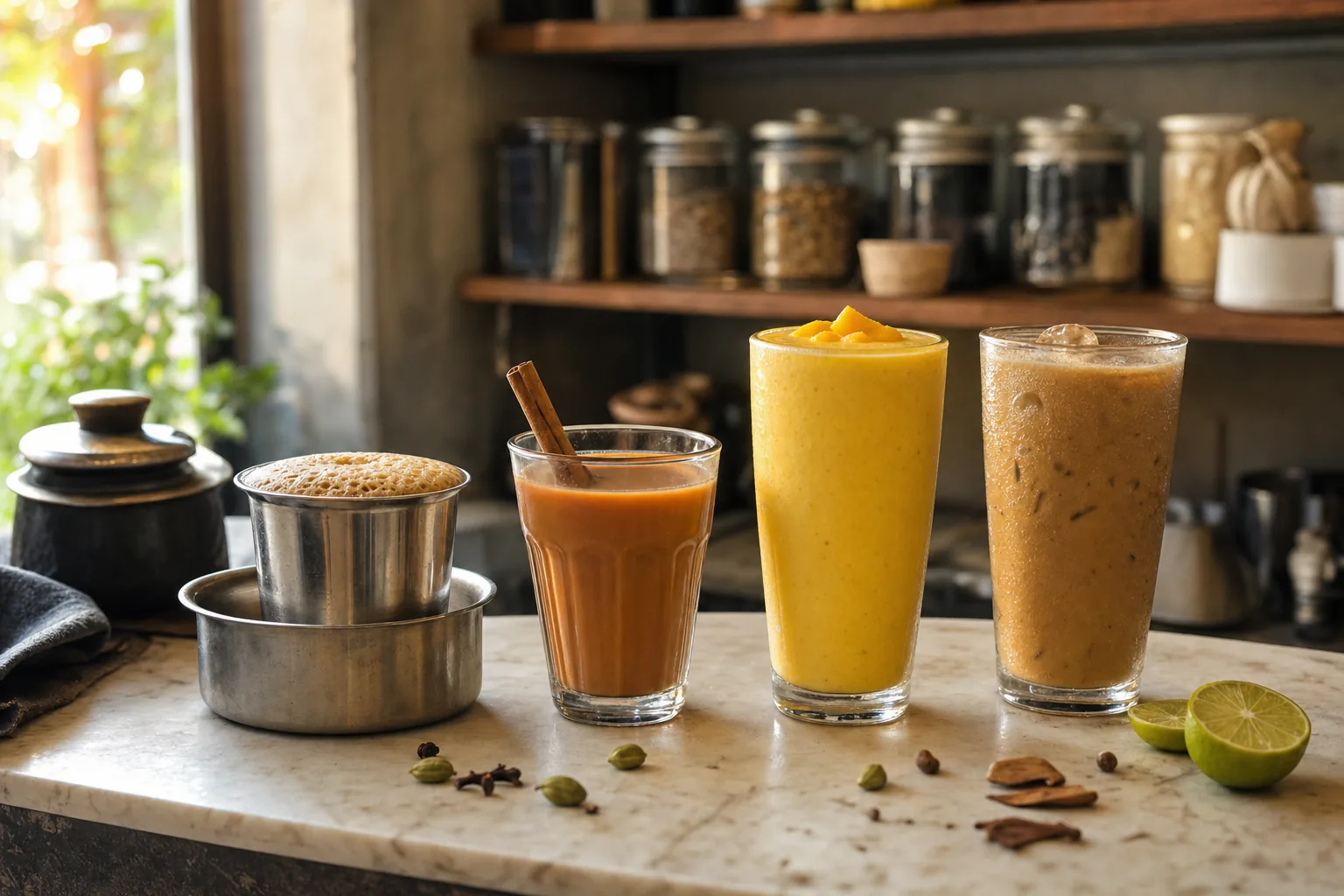
Why the beverage menu deserves real attention
Drinks are usually the first order a table places and often the last. A guest who gets a well-made coffee or a thoughtful cooler within minutes of sitting down relaxes into the meal; a guest who waits for a flat, lukewarm drink starts the meal irritated. The beverage menu sets the tone long before the kitchen sends its first plate.
Drinks are also where many restaurants and cafes find their healthiest margins. The ingredients in a cup of tea, a fresh lime soda or a filter coffee typically cost a small fraction of the price, and preparation is quick. That makes the drinks list worth the same planning you give the food: a clear structure, careful costing, consistent recipes and descriptions that help guests choose.
Yet many beverage menus are an afterthought, a long list of brand names and generic juices tacked onto the back page. Designing the list deliberately, in the voice of your restaurant, is one of the simplest ways to raise both guest satisfaction and average spend without changing the kitchen at all. It also gives front-of-house staff more to talk about, because a well-designed drinks list is easier to recommend from.
Structure the list the way guests think
Guests scan a drinks menu by occasion and temperature: something hot, something cold and refreshing, something with alcohol. Organize categories to match, and order them by the time of day you are busiest. A breakfast cafe leads with coffee and tea; a cocktail bar leads with signature drinks and puts coffee at the end with dessert. Restaurants usually place drinks after the food.
Keep each category short and curated. Five to eight well-chosen items per section are easier to read and easier for the bar to execute than twenty. Long lists slow decisions and push guests toward the safest, often cheapest, choice. If you need more range, use sizes and simple modifiers rather than extra lines. A single iced tea with three flavor options reads better than three separate iced teas.
Coffee
Build the coffee list around your espresso and brewing methods. List espresso-based drinks in order of milk content, from espresso and macchiato through cortado, cappuccino and latte, then add filter or pour-over options and any regional styles. State milk alternatives once, at the top or bottom of the section, rather than on every line. If you serve a single-origin coffee, name the origin and give a short tasting note.
Tea
Group teas by style: black, green, oolong, white, herbal infusions and spiced milk teas. Name the origin where it matters, such as Darjeeling first flush, Assam, Nilgiri, or a Japanese sencha, and state whether it is served with milk. Masala chai and other boiled milk teas belong in their own line because they are made very differently from steeped teas.
Juices, coolers and sodas
Separate fresh-pressed juices from blended drinks, smoothies and carbonated coolers. Regional coolers like nimbu pani, jaljeera, aam panna and kokum sharbat sit naturally here, alongside house sodas and iced teas. If you have a serious non-alcoholic program, give zero-proof drinks a section of their own rather than burying them among juices.
Cocktails, beer and wine where licensed
For licensed venues, lead with signature cocktails, then classics, then beer, then wine by the glass and bottle. Organize wine by style, such as crisp whites, aromatic whites, light reds and fuller reds, rather than by country, so guests who are not wine experts can choose confidently. Always follow your local licensing rules on how alcohol is described and priced.
- Lead with the category guests order most at your busiest time of day
- Keep five to eight items per section, and cut drinks that rarely sell
- Use sizes for small, regular and large rather than separate lines
- List milk alternatives and add-ons once per section with their price
- Give zero-proof drinks their own section with the same care as cocktails
- Place dessert drinks and digestifs near the dessert menu
Treat regional drinks with the same craft
Regional drinks are often the most memorable things on a beverage menu, and the most carelessly made. A South Indian filter coffee, a properly simmered masala chai or a thick Punjabi lassi can be a signature that guests travel for, but only if it is made to a recipe and served the traditional way. Write specs for these drinks with the same precision as an espresso recipe.
Filter coffee is typically made from a dark-roasted coffee often blended with chicory, brewed slowly through a two-chamber steel filter to produce a strong decoction. The decoction is mixed with hot milk and sugar and frothed by pouring between a steel tumbler and its dabarah, the wide saucer-bowl it is served in. Masala chai is simmered rather than steeped: strong black tea, often CTC Assam, boiled with water, milk, sugar and spices such as ginger, green cardamom, cinnamon, clove and black pepper until it is deep in color.
Look beyond your own region too. Vietnamese coffee dripped through a phin over condensed milk, Turkish coffee boiled in a cezve, Mexican horchata, Moroccan mint tea and Japanese matcha all have specific techniques and serving rituals. Learn them properly before putting them on the menu, and describe them so guests know what to expect. Train the team to explain them, too.
| Drink | Core technique | Service note |
|---|---|---|
| South Indian filter coffee | Slow-drip decoction, often with chicory, mixed with hot milk and sugar | Serve frothed in a steel tumbler and dabarah |
| Masala chai | Strong black tea simmered with milk, sugar and whole spices | Strain fresh; do not hold for hours on heat |
| Lassi | Chilled yogurt churned with water, sweet or salted, sometimes with fruit | Serve thick and cold; offer sweet, salted and mango |
| Nimbu pani or shikanji | Fresh lime, sugar or jaggery, black salt and roasted cumin | Offer still or with soda; balance salt and sweet |
| Vietnamese iced coffee | Strong coffee dripped through a phin over condensed milk | Stir and pour over ice at the table if possible |
Price drinks with pour cost, not guesswork
Pour cost, sometimes called beverage cost percentage, is the cost of the ingredients in one drink divided by its menu price. A drink whose ingredients cost 1.20 and which sells for 6.00 has a pour cost of 20 percent. Calculate it for every drink, not just cocktails, because costs creep up quietly on milk, syrups, fresh juice and takeaway cups.
Include everything that goes into the serve: coffee or tea by weight, milk by volume, sugar and syrups, garnish, ice if you buy it, straws, and the cup and lid for takeaway. For juices, cost by the yield you actually get from the fruit, not the purchase weight, because peel, seeds and pulp can be a large part of what you buy.
Set a target that fits your concept and costs, then price each drink to meet it while staying credible to guests. Regional and house-made drinks often carry strong margins because guests value the craft. Review pour costs whenever a supplier changes prices, and use your POS or sales records to see which drinks sell, which are profitable, and which deserve a better spot on the menu.
- Write the standard recipe for each drink with exact weights and volumes.
- Find the current unit cost of every ingredient and packaging item from your invoices.
- Calculate the cost per serve, adjusting fresh produce for real yield.
- Divide the cost per serve by the menu price to get the pour cost percentage.
- Adjust price, portion or recipe for any drink that misses your target.
- Repeat the calculation when prices change and at least every quarter.
Pair drinks with your food
Pairing is not only for wine lists. Every restaurant can suggest drinks that make its food taste better, and doing so raises both satisfaction and spend. The principles are simple and apply to coffee, tea, sodas and cocktails as much as to wine. You do not need a sommelier to apply them; you need a team that has tasted the drinks with the food and can explain why a pairing works in one sentence at the table.
Match intensity first: a delicate fish needs a lighter drink than a rich lamb curry. Then think about contrast and balance. Acidity and carbonation cut through fat and fried food, sweetness and dairy calm chili heat, tannin from strong tea or red wine stands up to rich meat, and bitter notes in coffee or tonic balance sweet desserts. Indian kitchens have long practised this: a salted lassi with a fiery Andhra meal or a cup of sweet chai with fried pakoras is pairing in everything but name.
- Spicy dishes: lassi, buttermilk, off-dry white wine, lightly sweet ginger or lime soda
- Fried snacks and chaat: sparkling drinks, nimbu soda, crisp lager, high-acid wines
- Rich curries and grills: strong black tea, Assam iced tea, medium-bodied reds or amber beers
- Seafood and light dishes: green tea, citrus coolers, crisp whites, dry sparkling drinks
- Chocolate and caramel desserts: espresso, filter coffee, cold brew, fortified wines where licensed
- Fruit desserts: herbal infusions, floral teas, fruit shrubs, light dessert wines
Pairing is not only for wine lists.
Write drink descriptions that help guests choose
A good drink description answers the questions a guest would ask a server: what does it taste like, is it sweet, is it strong, is it hot or cold, and how big is it. Lead with the main flavor and finish with the texture or serving style. Iced Assam tea with peach and lemon, lightly sweet, served tall over ice tells a guest everything in a single line.
Avoid jargon that alienates and brand names that add nothing. Terms like natural process, washed or first flush are useful for coffee and tea enthusiasts, but pair them with a plain-language flavor note. Be precise about sweetness and caffeine, which guests care about, and about allergens such as dairy, nuts in syrups or gluten in malted drinks. Accuracy here builds trust.
Keep the tone consistent with the food menu. If your dish descriptions are short and factual, keep drink descriptions the same. Name house-made elements, such as house ginger syrup or fresh-pressed juice, because craft justifies price, but only if they are genuinely made in house. Read the full drinks list aloud to a colleague before printing or publishing it; any description that sounds awkward spoken will read awkwardly too, and anything a server would need to explain probably needs rewriting.
Use seasonal drinks to keep the list fresh
Seasonal drinks give regulars something new without overhauling the whole list. Summer in India is the season for aam panna, kokum coolers and sugarcane juice; monsoon suits ginger-heavy chai and hot soups; winter brings saffron milk, spiced hot chocolate and gajar kanji. In temperate climates, think elderflower and rhubarb in spring, berries and stone fruit in summer, apple, pear and spice in autumn and citrus in winter.
Share ingredients with the kitchen wherever you can. Citrus peels from the pastry section become oleo saccharum, mango trimmings from a dessert become a cooler, and the herb stems from the garnish station flavor a syrup. This lowers cost, reduces waste and connects the drinks to the food on the plate. Agree these hand-offs at the weekly planning meeting so the bar knows what will be available.
Run seasonal drinks as specials first, just like new dishes. Track how they sell using your sales records, ask staff for guest feedback and keep only the ones that earn their place. A drink that sells well can return next year as a familiar seasonal favorite. Note the recipe, cost and sales in your recipe book at the end of each run so next year's version starts from evidence rather than memory.
Present the drinks menu clearly
Placement matters. On a printed menu, drinks often sit on the back or a separate card; on a digital menu, they usually work best as their own categories near the top for cafes and bars, or after mains for restaurants where drinks are secondary. Put your most profitable signature drinks at the top of each section, where guests look first.
Show sizes and prices clearly and consistently. If a coffee comes in small and large, or a juice in regular and jug, list the sizes with their prices under the drink rather than as separate items. Mark sold-out drinks quickly, because few things frustrate a guest more than ordering a seasonal cooler and being told it finished an hour ago.
In Menulo, for example, owners and managers can give each drink priced portions such as small, regular and large, add a short description and photo, and mark a drink or a single size sold out when the mangoes or the cold brew run out. The menu guests open from the QR code updates without reprinting anything. Check it on a phone after each change.
Frequently asked questions
How many items should a beverage menu have?
There is no fixed number, but shorter is usually better. Five to eight well-chosen items per category is easier for guests to read and for the bar to execute consistently. Use sizes and simple modifiers instead of extra lines, and use your sales records to cut drinks that rarely sell or slow down service.
How do you calculate pour cost for a drink?
Add up the cost of everything in one serve, including the base, milk, syrups, garnish, ice and any cup or lid, then divide by the menu price and multiply by 100. A drink costing 1.20 that sells for 6.00 has a pour cost of 20 percent. Recalculate whenever ingredient prices change.
How should a drinks menu be organized?
Organize it the way guests think: hot drinks, cold and refreshing drinks, and alcoholic drinks where licensed. Lead with the category you sell most at your busiest time. Within each section, place signature drinks first, keep the list short, and list sizes, milk alternatives and add-ons clearly with their prices.
What is the difference between filter coffee and espresso?
South Indian filter coffee is brewed slowly by gravity through a two-chamber steel filter, often from a coffee and chicory blend, producing a strong decoction mixed with hot milk and sugar. Espresso is brewed in seconds by forcing hot water through finely ground coffee under pressure. They taste and are served very differently.
Which drinks pair well with spicy food?
Dairy and gentle sweetness calm chili heat, so lassi, buttermilk and lightly sweet coolers work well. Carbonation and acidity refresh the palate, which suits lime sodas and ginger drinks. Where licensed, off-dry white wines and crisp lagers are popular choices. Avoid high-alcohol or very tannic drinks, which can make heat feel stronger.
- #beveragemenu
- #drinksmenudesign
- #pourcost
- #coffeeandteamenu
- #foodanddrinkpairing